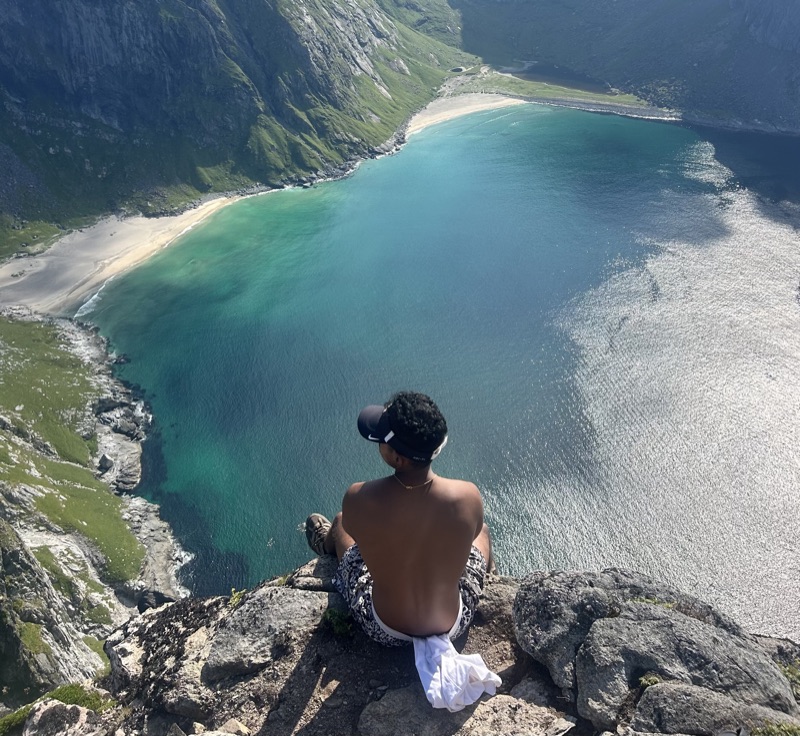
In the summer of 2024 I was solo traveling through Norway, and I checked into a hostel in Bergen that was, without exaggeration, the quietest social space I've ever entered. Beautiful building. Great location. Total silence. A common room full of people staring at their phones, headphones in, nobody making eye contact.
Which was a problem, because meeting people is the entire reason I stay in hostels. I'm happy to pay more for a hotel — I was there for the people.
I remember sitting in that common room doing the same thing as everyone else — scrolling — and thinking: statistically, half the people in this room want to grab dinner with someone right now. We are all within fifteen meters of each other. And there is no good way for any of us to say it.
the thing about travel friendships
If you've traveled solo, you know the magic I'm talking about. Friendship on the road runs on fast-forward. At home, going from stranger to real friend takes months of scheduled coffees. Traveling, it takes one shared dinner and a walk back to the hostel. Three days later you're planning to visit each other's countries — and the wild part is, you actually do.
I think it's because travel strips away the usual context. Nobody knows your job title or your history. You meet people as just themselves, doing something slightly brave at the same time you are. It creates a particular kind of openness that's very hard to find anywhere else, and some of my most important friendships started exactly that way.
That experience felt too valuable to be left to hostel luck.
the gap
When I looked at the existing options, everything was shaped wrong. Dating apps had the mechanics — nearby people, profiles — but pointed at the wrong goal, and using them "for friends" was awkward for everyone. Event platforms wanted me to plan around a schedule made weeks ago. Facebook groups were spam with occasional humans.
Nothing answered the actual question of that Bergen common room: "I'm here right now and I'm getting dinner. Who wants to come?"
The plan was the missing piece. Not profiles, not chat — a real activity, at a real time, that a real person could just join.
the one-way door
I flew home from that trip and quit my job. Not eventually — pretty much immediately. It sounds dramatic in retrospect and honestly it felt dramatic at the time, but the logic was simple: I'd found the problem I couldn't stop thinking about, and things you can't stop thinking about don't wait politely while you save up courage.
I've been building Nomadtable every day since.
what we believe
A few principles have been in the product from day one, and they explain most of the decisions we make:
- Plans over profiles. You join a dinner, not a person. Activity first, friendship follows — that's the natural order and the app is built around it.
- It's not a dating app. This is written into our community guidelines and enforced for real. Mixed intentions ruin friend-making spaces, especially for women. Protecting that boundary is protecting the whole product.
- Safety is a feature, not a page. Group-first meetups, optional photo verification, live location sharing, female-only activities. Feeling safe is a precondition for the openness that makes travel friendships possible.
- The core is free. Meeting people when you're alone in a new city shouldn't be a premium feature. It never will be.
where it's going
Today, millions of travelers use Nomadtable to find each other — dinners in Lisbon, hikes in Da Nang, museum days in Mexico City. Every week someone writes to tell us about a friendship, a travel crew, occasionally a best friend they met through a plan someone posted on the map. Those messages are the entire fuel supply of this company.
The belief behind all of it hasn't changed since that common room in Bergen: no one should have to travel alone unless they want to. If you've ever sat in a quiet hostel wishing someone would just say "we're getting food, come along" — we built this for you. Come say hi.
— jay, founder